

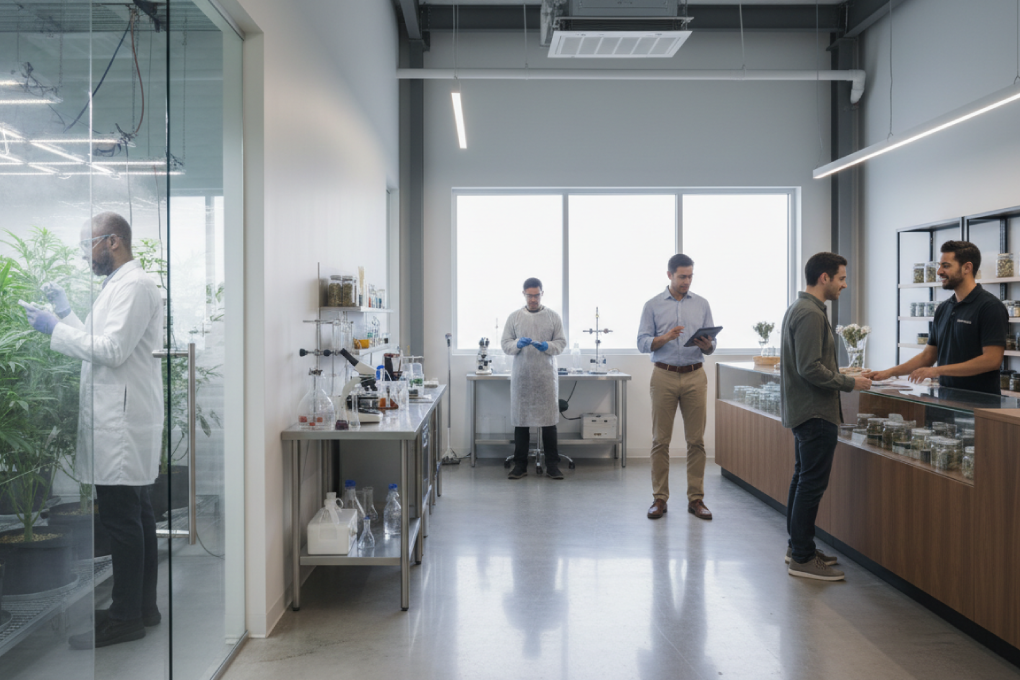
When people hear the phrase “careers in cannabis,” reactions often range from curiosity to skepticism. For some, the industry still carries cultural associations from decades past. For others, it represents opportunity in a rapidly evolving regulated market. The reality today is far more structured and professional than many assume. Legal cannabis in the United States operates within detailed regulatory frameworks, requires licensed operations, and supports a growing ecosystem of specialized roles that mirror — and in some cases exceed — the complexity of traditional industries.
As more states establish medical and adult-use programs, the cannabis industry has matured into a multifaceted business environment. It includes cultivation facilities, manufacturing operations, laboratories, retail storefronts, compliance departments, logistics networks, and technology platforms. Understanding what the industry actually looks like today requires moving beyond stereotypes and examining how modern cannabis businesses function on a daily basis.
Unlike informal markets of the past, legal cannabis businesses operate under state licensing systems. Each state with a regulated program establishes rules governing cultivation, processing, distribution, testing, retail sales, and recordkeeping. These rules shape the professional landscape.
Every licensed facility must comply with inventory tracking requirements, age verification protocols, packaging standards, testing mandates, and reporting obligations. As a result, many cannabis careers revolve around ensuring compliance and operational accountability. This regulatory foundation has created demand for professionals who understand documentation, auditing, quality assurance, and operational oversight.
In practical terms, that means the industry is not simply about product. It is about structure, policy adherence, and risk management.
At the cultivation level, cannabis production resembles highly controlled agriculture. Grow operations may be indoor, greenhouse-based, or outdoor, depending on state regulations and climate conditions. Cultivation teams include growers, horticulture specialists, irrigation technicians, environmental control managers, and operations supervisors.
These professionals manage lighting systems, nutrient schedules, pest prevention protocols, and harvest timelines. Modern facilities often rely on data monitoring systems to maintain consistency and ensure product quality. The work requires knowledge of plant biology, environmental management, and strict compliance with state tracking systems.
Far from informal gardening, licensed cultivation demands coordination, documentation, and adherence to regulatory standards at every stage of growth.
After harvest, many cannabis businesses move products into manufacturing environments. These facilities produce a range of regulated goods depending on state law, including concentrates, infused products, and other processed forms. Manufacturing teams may include extraction technicians, formulation specialists, production managers, and quality control supervisors.
Because regulated markets require precise labeling and testing before products reach retail shelves, manufacturing roles often intersect closely with compliance oversight. Processes must be documented, equipment maintained, and production runs tracked carefully to ensure consistency and safety.
This layer of the industry reflects industrial standards seen in food production and pharmaceutical environments, with added regulatory monitoring specific to cannabis.
State regulations typically require laboratory testing before cannabis products can be sold to consumers. Independent testing laboratories analyze samples for potency and screen for contaminants in accordance with state guidelines. Laboratory roles include analytical chemists, lab technicians, quality assurance managers, and data analysts.
Testing environments operate under scientific protocols, utilizing specialized equipment and documented procedures. These positions demand technical training and adherence to laboratory standards. Their work contributes directly to consumer safety and regulatory transparency.
The presence of licensed testing labs illustrates how scientific oversight is integrated into modern cannabis markets.
Retail storefronts represent the most visible segment of the cannabis workforce. Dispensaries operate under strict rules regarding age verification, transaction limits, and recordkeeping. Retail teams may include store managers, inventory coordinators, compliance officers, and customer-facing staff.
Retail employees are responsible not only for assisting customers but also for ensuring that each transaction complies with state regulations. Inventory tracking systems document product movement in real time, reducing diversion risks and supporting transparency.
As regulated markets mature, retail roles increasingly emphasize professionalism, training, and operational standards similar to other regulated retail sectors.
One of the most significant areas of employment growth in cannabis involves compliance. Every licensed operator must follow detailed state regulations. Compliance professionals monitor inventory reporting, maintain documentation, oversee internal audits, and communicate with regulators when necessary.
These roles often require backgrounds in law, risk management, or regulatory affairs. Their work ensures that businesses operate within legal parameters and maintain license eligibility. Without compliance teams, licensed operations cannot function effectively.
This layer of oversight underscores how cannabis has evolved into a rule-driven industry requiring structured governance.
Depending on state structure, cannabis products move through regulated distribution systems before reaching retail locations. Logistics professionals coordinate secure transport, inventory reconciliation, and chain-of-custody documentation.
Drivers, dispatch coordinators, and warehouse managers operate within compliance frameworks that track product movement. Secure transport protocols are integral to maintaining regulatory oversight.
These roles highlight the operational infrastructure supporting the industry beyond cultivation and retail.
Like any established industry, cannabis businesses require administrative leadership and corporate structure. Finance teams manage accounting and reporting. Human resources professionals oversee hiring, training, and workplace policies. Marketing departments coordinate outreach within state advertising rules. Executive leadership guides long-term strategy and expansion planning.
Because cannabis remains federally regulated differently than most industries, financial management and legal counsel play particularly important roles. Professionals in accounting, legal advisory, and business operations contribute directly to stability and sustainability.
The presence of these corporate roles reinforces that cannabis companies operate as structured businesses rather than informal enterprises.
Technology supports nearly every aspect of modern cannabis operations. Inventory tracking software, point-of-sale systems, compliance reporting tools, and customer engagement platforms help businesses remain organized and transparent.
Technology professionals — including developers, data analysts, and system administrators — contribute to improving efficiency and regulatory compliance. As markets expand, digital infrastructure continues to shape how cannabis businesses operate and connect with consumers.
This intersection of technology and regulation reflects the broader modernization of the industry.
Many professionals entering the cannabis workforce bring experience from other sectors. Backgrounds in agriculture, retail management, laboratory science, logistics, compliance, marketing, and technology are directly applicable. The regulated nature of the industry means that structured experience often translates well.
For those considering a transition, understanding state-specific licensing structures and compliance expectations is essential. Researching how regulated markets operate provides clarity on where professional skills may align.
Careers in cannabis increasingly resemble careers in other regulated industries — structured, documented, and accountable.
The perception of cannabis careers has shifted as regulated markets have matured. The industry today reflects layers of oversight, professional standards, and operational complexity. Licensed businesses must meet compliance benchmarks and operate transparently.
Understanding the workforce behind regulated cannabis helps clarify that the industry supports diverse roles requiring varied expertise. From scientists and compliance officers to retail managers and software developers, cannabis businesses depend on specialized professionals working within defined regulatory frameworks.
As legalization continues at the state level, the professional landscape will likely continue evolving — guided by policy, compliance requirements, and operational best practices.
Careers in cannabis today are grounded in structure, regulation, and professional standards. The industry encompasses cultivation science, laboratory testing, manufacturing oversight, retail management, compliance auditing, logistics coordination, corporate administration, and technology innovation.
Far removed from outdated stereotypes, modern cannabis businesses operate within detailed state regulatory systems that require accountability at every level. Understanding what the industry actually looks like reveals a workforce built on professionalism and structured governance.
For professionals evaluating opportunities, clarity begins with recognizing that legal cannabis is not defined by cultural myths but by regulatory compliance and operational discipline. As the industry continues to mature, careers in cannabis increasingly reflect the same standards of organization and accountability found across other regulated sectors.
(Sources: National Conference of State Legislatures | U.S. Small Business Administration | U.S. Bureau of Labor Statistics | National Association of State Departments of Agriculture)

