

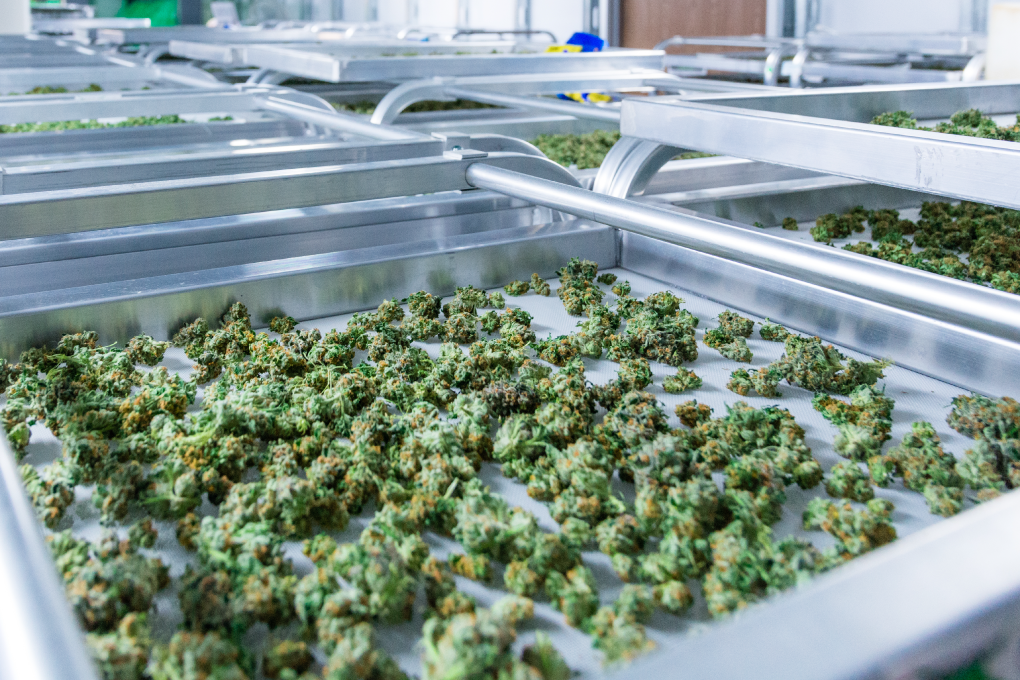
Harvest day feels like the finish line, but for cannabis flower it is really the beginning of another critical phase. Freshly cut plants are not ready to be placed directly into retail packages. They contain substantial moisture, remain biologically and chemically dynamic, and must move through post-harvest steps that can influence safety, aroma, appearance, stability, and consistency.
Drying and curing are often discussed as traditions or craft techniques, but modern research is giving the industry better ways to understand what happens during these stages. Studies have examined drying speed, moisture, microbial levels, cannabinoid changes, terpene losses, storage conditions, and industrial drying systems. The results make one point clear: cultivation quality can be preserved or diminished after the plant is cut.
For consumers, this hidden part of the supply chain helps explain why two batches grown from similar genetics can reach the shelf with noticeably different characteristics.
Living plant material contains a large amount of water. After harvest, that moisture has to be reduced to a level suitable for further handling and storage.
If material remains too wet for too long, conditions can support microbial growth and spoilage. If it is dried too aggressively, volatile aromatic compounds can be lost and the physical quality of the flower can suffer.
The objective is therefore not simply to make cannabis dry. Producers need a controlled process that removes moisture while protecting desirable characteristics and preparing the material for later stages.
Traditional approaches often involve hanging whole plants or branches in environmentally controlled rooms. Other systems use trays, racks, specialized drying equipment, or combinations of airflow and environmental control.
Recent research continues to compare these methods. A 2026 industrial study of tray and hang air-drying systems found that both approaches could reduce cannabis moisture within several days under the studied conditions, while tray drying increased drying rates. The researchers also demonstrated the usefulness of real-time humidity monitoring for tracking drying progress.
Results from one study should not be treated as a universal recipe. Cultivar, plant structure, room conditions, equipment, harvest moisture, and desired product characteristics can all influence the process.
Heat can accelerate moisture removal, but cannabis contains volatile compounds that can be sensitive to processing conditions. Terpenes are particularly relevant because they contribute heavily to aroma.
Research on hemp and cannabis post-harvest handling has found that drying method can influence volatile composition and other quality measures. Faster is therefore not automatically better, and slower is not automatically safer.
Commercial operators monitor temperature, relative humidity, airflow, and time to keep the process within defined parameters. Consistency is important because a large room can develop environmental differences if air movement is poorly managed.
Moisture percentage is useful, but food and agricultural science also use the concept of water activity. Water activity describes how much water is available for chemical reactions and microbial growth rather than simply measuring total water present.
This matters because two materials with similar moisture content can behave differently depending on how water is bound within them. Post-harvest cannabis research increasingly uses water activity and related measurements to evaluate stability and microbial risk.
Producers need validated targets appropriate to their products and regulatory environment rather than relying on feel alone.
Cannabis is an agricultural product and can carry microorganisms. Post-harvest conditions can influence whether yeast, mold, and other microbes remain controlled or increase.
A 2025 Cornell-led study comparing drying and curing approaches in cannabinoid-type hemp found meaningful differences in drying time and microbial measurements. The work also showed why the relationship between heat, drying efficiency, cannabinoid preservation, and microbial control is more complicated than a single preferred technique.
Commercial cannabis programs can require microbial testing before products are released. Good post-harvest practices reduce risk before a laboratory sample is ever collected.
After or around drying, flower is typically trimmed to remove excess leaves and prepare buds for sale or further processing. Some producers trim before drying, while others use dry-trimming workflows.
Trimming can be performed by hand, machine, or a combination. Hand trimming can offer detailed control but requires substantial labor. Mechanical systems increase throughput but may affect appearance or remove more surface material depending on equipment and settings.
Trim is not necessarily waste. Depending on quality, regulations, and business operations, plant material removed from flower may be directed toward extraction or other permitted uses.
Curing generally refers to a controlled period after initial drying in which flower is held under managed conditions. The industry often associates curing with improved aroma, moisture distribution, and overall sensory quality.
Scientific research on curing is less standardized than many consumer discussions imply. A 2025 study found that drying and curing conditions could affect moisture, decarboxylation, color, and microbial measurements, while additional research has documented changes in terpenes and cannabinoids during post-harvest handling and storage.
The important point is that curing is not magic. It is another controlled storage stage whose outcome depends on starting material, environment, duration, container, and handling.
Terpenes are volatile compounds, which makes post-harvest preservation challenging. Research from the University of Georgia examining drying, curing, and storage in hemp flower found that monoterpenes were especially sensitive to post-harvest handling, while other compounds showed different patterns of stability.
This supports something consumers can notice directly: flower with excellent genetics can reach the shelf with a muted aroma if volatile compounds were not well preserved.
It also explains why judging cultivation alone does not tell the complete quality story. Harvest timing and post-harvest execution are part of the final product.
Cannabinoids are generally less volatile than terpenes, but they are not immune to chemical change. Acidic cannabinoids can decarboxylate, and THC can degrade over time under certain storage conditions.
Temperature, oxygen, light, time, and storage environment can all matter. Different studies have reported different rates of change depending on their methods and conditions.
This is another reason laboratory results belong to identified batches and dates. A product's chemistry is measurable, but it is not necessarily permanent forever.
In regulated markets, finished or intermediate cannabis batches may be subject to required laboratory testing before sale. The exact panel depends on jurisdiction and product type.
Testing can include cannabinoid potency and specified contaminants such as microbes, pesticides, heavy metals, residual solvents, or other analytes. A compliant result provides information about the tested batch under the applicable program; it is not a guarantee about every cannabis product generally.
Sampling procedures matter because a laboratory can only analyze the material it receives. Regulatory programs therefore establish requirements intended to make sampling and testing meaningful.
Some producers use permitted remediation technologies to address microbial concerns or other quality issues. Methods and rules vary, and consumers may have strong opinions about particular technologies.
Ohio's September 2026 packaging rules provide an interesting example of increasing transparency: if plant material was not subjected to specified technology solutions such as irradiation, ozone, radiofrequency, or UV treatment, a licensee may indicate that fact on direct-sale packaging in accordance with state requirements.
That does not mean untreated automatically equals superior, or that every treatment produces the same result. It means post-harvest processing is becoming another area where consumers may receive more information.
Once flower has been dried, cured, tested, and approved for sale, packaging becomes its immediate storage environment. The container has to protect the product while meeting applicable child-resistance, tamper-evidence, labeling, and product-integrity requirements.
Oxygen, light, temperature, and humidity can continue to affect flower after packaging. Research has documented changes in volatile compounds and cannabinoids under different storage conditions.
Retailers and consumers therefore share responsibility for what happens next. A carefully processed product can still deteriorate if it is stored in excessive heat or direct sunlight.
Cannabis is an agricultural product, not a perfectly uniform manufactured molecule. Genetics establish potential, but cultivation conditions, harvest timing, drying, curing, trimming, storage, and packaging can introduce variation.
Professional producers work to reduce unwanted variation through standard operating procedures, environmental monitoring, testing, and quality-control programs. Complete uniformity is difficult because biological material naturally varies.
This is why consumers may notice differences between two harvests carrying the same cultivar name. The name is only one part of the product's history.
A package cannot reveal every detail of post-harvest handling, but it can provide clues and connections to the regulated process behind the product.
A home grower can inspect a small number of branches individually. A commercial facility may need to process a large harvest while maintaining consistent environmental conditions across rooms, racks, or drying systems.
Scale creates engineering and workflow questions. Dense material can release substantial moisture into a room. Employees need space and procedures for handling product without mixing batches. Environmental sensors have to represent conditions throughout the area rather than at one convenient location.
Commercial post-harvest design therefore combines plant science with facility management, sanitation, documentation, labor planning, and quality control.
Growing a healthy cannabis plant is only half the story. After harvest, producers have to manage moisture, microbes, volatile compounds, chemical stability, trimming, testing, packaging, and storage.
Research is helping the industry replace assumptions with measurable post-harvest science, but there is still no universal procedure that fits every cultivar, facility, and product. Good operators use validated processes and monitor outcomes rather than relying only on tradition.
For consumers, the takeaway is simple: the flower in a sealed jar reflects much more than genetics and cultivation. Its final quality is the result of decisions made all the way from harvest through the moment the package reaches the shelf.
(Sources: PubMed | Cornell University | University of Georgia | Ohio Division of Cannabis Control)

