

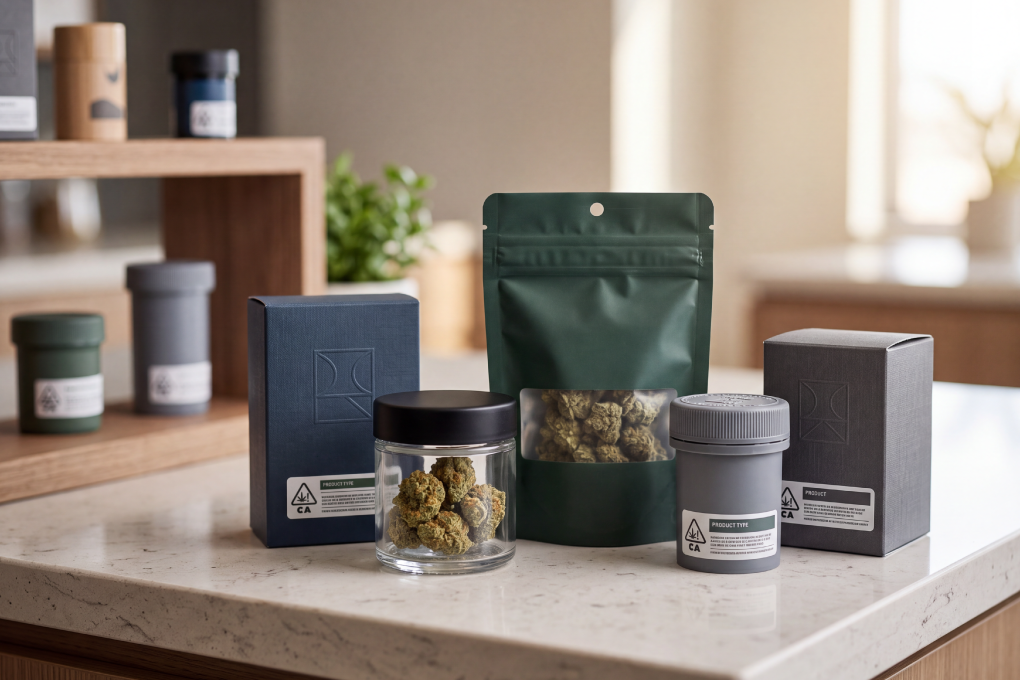
Cannabis packaging may look like a simple container, but in a regulated market it performs several jobs at once. It protects the product, carries required information, helps prevent unintended access, gives regulators a way to identify compliant products, and provides consumers with details that can influence a purchasing decision. As legal cannabis markets mature, packaging is becoming less about decoration and more about the intersection of safety, transparency, branding, and regulation.
That change is especially timely in Ohio. New state packaging and labeling rules became effective on September 11, 2026. The rules establish detailed requirements for products intended for direct customer sale, including child-resistant and tamper-evident packaging, required symbols and information, and limits on imagery or claims that could mislead consumers or appeal to children. Ohio is only one state, and cannabis rules differ across the country, but the changes provide a useful example of how much responsibility can be attached to a package.
For consumers, understanding that responsibility can make a dispensary shelf easier to navigate. A compliant package is not merely a branded bag, jar, box, or container. It is part of the regulated system surrounding the product inside.
Most retail packaging is designed to protect a product and help sell it. Cannabis packaging must often do those things while satisfying additional rules related to age restrictions, intoxicating ingredients, product identification, warnings, testing information, and safe storage.
Requirements vary by jurisdiction and product type. Flower, concentrates, edible products, beverages, and other forms may not be governed identically. A state may specify how a package closes, what information appears on the label, how potency is displayed, which warning symbol is required, or whether certain information can be provided electronically.
This is one reason cannabis packages can contain far more information than consumers initially expect. The design has to leave room for compliance while remaining readable and useful.
Ohio's rules effective September 11 provide a current example. Before cultivators and processors use packaging intended for direct customer sale, the packaging generally must receive approval from the Division of Cannabis Control. The approval process requires evidence that the package is tamper-evident and child resistant under the applicable federal standard, along with package renderings, the universal THC symbol, and the state cannabis-control seal.
Ohio also requires direct-sale packages to maintain the integrity and stability of the cannabis inside. Labels for cannabis plant material include information such as the cultivator, harvest and packaging dates, product registration information, strain name, weight, THC information, testing laboratory information, the tracking number associated with the tested batch, specified cannabinoids, leading terpenes, and required warning language.
These details illustrate an important distinction: packaging is part of the product's compliance record. The container consumers see is connected to cultivation, testing, inventory tracking, and retail oversight that happened before the product reached the shelf.
One of the most important packaging goals is reducing unintended access by children. Child-resistant does not mean that a package is impossible for a child to open under every circumstance. It refers to packaging designed and tested under defined standards to make access more difficult for children while remaining usable by adults.
This matters particularly for products that can resemble familiar foods or beverages. An edible product left outside its original package can be difficult for a child or another adult to distinguish from an ordinary snack. Keeping regulated products secured and in their original packaging helps preserve both the safety features and the identifying information provided by the manufacturer.
Packaging cannot replace responsible storage. Adults still need to keep cannabis inaccessible to children and pets. A child-resistant closure is an additional layer of protection, not permission to leave a product unattended.
Tamper-evident packaging provides a visible indication when a package has been opened or altered. That feature can help consumers identify whether a product appears to have remained sealed after packaging.
It also supports the broader chain of custody. Cannabis products can pass through several regulated stages before sale. A package that protects its contents and shows evidence of opening helps maintain confidence that the item presented at retail is the item that moved through the regulated process.
Consumers should inspect packaging before purchase when possible and follow the retailer's procedures if a seal appears damaged. They should not assume that a package is acceptable simply because the exterior looks attractive or professionally printed.
A modern cannabis label can tell a consumer much more than a product name. Depending on local requirements, it may include potency, serving information, ingredients, allergens, production or harvest dates, batch identifiers, laboratory information, warnings, cannabinoid results, terpene information, and instructions for storage.
This makes label literacy increasingly valuable. A consumer who understands the basic fields can compare products using more than a large THC number on the front of a package. Dates can provide context about freshness. Batch information can connect a product to testing. Ingredient lists matter for infused products. Serving information can be critical for formats whose effects may be delayed.
Not every state requires the same information, so consumers should learn the rules and terminology used where they shop rather than expecting a national label standard.
Ohio now requires a universal THC symbol in specified places, including packages intended for direct customer sale. The symbol must be clearly visible and meet state requirements for size and presentation.
A recognizable symbol gives consumers a quick visual cue that a product contains THC even when the rest of the packaging varies dramatically between brands. This is particularly useful in a marketplace where cannabis can appear as flower, food-like products, beverages, vaporization products, and other formats.
The symbol does not tell a consumer everything about potency or appropriate use. Its purpose is identification. Consumers still need to read the complete label.
Packaging is also advertising space, which creates tension between branding and public-safety rules. Ohio's current rule prohibits direct-sale packaging that is false or misleading, attractive to children, uses certain youth-oriented characters or icons, depicts cannabis consumption, encourages excessive use, contains health-related statements, improperly suggests government endorsement, or violates trademark or copyright law.
Those restrictions address several concerns at once. Youth-oriented imagery can make an age-restricted product look familiar to children. Unsupported health claims can cause consumers to treat marketing as medical evidence. Copying established candy, snack, or entertainment brands can create confusion and intellectual-property problems.
For cannabis businesses, creative branding therefore has boundaries. Professional design has to work inside the rules rather than attempting to disguise or minimize what the product is.
A package also creates the immediate environment around the product. Light, oxygen, heat, moisture, and physical damage can affect cannabis quality over time. Packaging cannot control every storage condition, but an appropriate container can help protect the product during distribution, retail storage, and consumer possession.
Different product forms have different needs. Flower must be protected from excessive moisture loss and unsuitable humidity while avoiding conditions that encourage microbial growth. Edible products may have ingredient-specific stability concerns. Concentrates and other processed products may require containers selected for their physical and chemical characteristics.
Consumers should still follow storage directions and avoid leaving cannabis in hot vehicles, direct sunlight, or unsecured locations. Good packaging works best when paired with good storage.
Safety requirements can create another challenge: waste. Child-resistant mechanisms, labels, inserts, seals, and protective materials can increase the amount of packaging associated with a relatively small product.
The cannabis industry has an incentive to find designs that meet regulatory and product-protection requirements without using unnecessary material. That can involve recyclable components where practical, appropriately sized containers, reusable systems where permitted, and packaging engineered to achieve several functions with fewer pieces.
Sustainability claims should be evaluated carefully. A package that looks environmentally friendly is not automatically recyclable in a consumer's local system, and cannabis residue or mixed materials may affect disposal options. Clear instructions are more useful than vague green marketing.
If information is unclear, a licensed retailer should be able to explain how to locate required details without making unsupported claims about effects or medical outcomes.
For businesses, packaging compliance begins long before products reach a dispensary. Designers, cultivators, processors, compliance teams, testing laboratories, and retailers may all contribute information that eventually appears on or is associated with the package.
A rule change can therefore affect artwork, printing, inventory, product registration, training, websites, menus, and operational procedures. Existing packaging inventory can become a significant business consideration when requirements change. Accurate version control and regulatory review are essential.
Businesses also have to resist the temptation to treat compliance as a final proofreading step. Packaging should be designed around the applicable rules from the beginning. That approach is more efficient than creating an attractive package first and attempting to retrofit required information later.
Cannabis packaging can be confusing for multi-state consumers because there is no single nationwide retail cannabis label used by every legal market. States developed programs at different times, under different statutes, with different public-health priorities and product definitions. A symbol, warning, potency format, or required date in one jurisdiction may be presented differently in another.
For multi-state businesses, this can require separate package versions and compliance reviews. For consumers, it means familiarity with one state's label should not be treated as proof that another state's package is missing information. The relevant question is whether the product complies with the rules where it is lawfully sold.
Greater standardization may emerge as markets mature and analytical methods improve, but consumers should expect state-specific differences for the foreseeable future.
Legal cannabis has moved far beyond anonymous containers and handwritten labels. Modern packaging sits at the point where agriculture, laboratory testing, regulation, branding, retail, and consumer safety meet.
Ohio's September 2026 changes make that especially visible, but the broader lesson applies wherever regulated cannabis is sold: the outside of the package can reveal a great deal about the system behind the product. Consumers who learn to read it gain another tool for making informed choices, while businesses that treat packaging as a serious compliance and communication responsibility are better positioned to earn trust.
The next time a cannabis package looks unusually detailed, there is a reason. Much of what appears on it is not simply there to sell the product. It is there to identify, protect, explain, and account for what is inside.
(Sources: Ohio Division of Cannabis Control | Ohio Administrative Code | U.S. Consumer Product Safety Commission)

